
why make this recipe
Making homemade samosa sheets is a simple and rewarding experience. Store-bought options can often lack freshness and flavor. By preparing these sheets at home, you gain control over the ingredients for a healthier choice. Plus, using fresh, warm samosa sheets can make your snacks taste even better. Whether you’re planning to make traditional samosas, spring rolls, or box patties, these sheets will enhance the overall texture and flavor of your dish.
how to make Homemade Samosa Sheets
Ingredients:
- 2 cups all-purpose flour (maida)
- 1/2 teaspoon salt
- 3/4 cup water (adjust as needed)
- 2–3 tablespoons oil (for brushing between layers)
- Extra dry flour for dusting
Directions:
- In a large bowl, add all-purpose flour and salt. Mix well.
- Slowly add water little by little and knead into a smooth, medium-soft dough. The dough should not be too hard and not sticky.
- Cover the dough and let it rest for 10–15 minutes.
- After resting, knead again for 1–2 minutes until smooth. Divide the dough into 16 equal balls. Keep them covered.
- Roll each ball into a thin small roti (about 6–7 inches). Dust lightly with dry flour while rolling.
- Take one rolled roti, brush a thin layer of oil on top and sprinkle a little dry flour. Place another roti on top. Repeat the same process and stack 4 rotis together.
- Gently roll the stacked rotis into one thin large circle. Do not press too hard.
- Heat a tawa on medium heat. Place the rolled stack on the hot tawa and cook for a few seconds on each side. Do not fully cook. Light bubbles should appear, but the sheets should remain soft and pale.
- Remove from heat and separate the layers immediately while still warm. Peel gently to get thin individual sheets.
- Trim the edges if needed. Your samosa sheets are ready to use for samosas, spring rolls, or box patties.
how to serve Homemade Samosa Sheets
You can use the homemade samosa sheets to make various snacks. Fill them with your favorite ingredients, such as spiced potatoes, paneer, or vegetables. Fold or shape them into triangles to make samosas, or use them to wrap filling for spring rolls. Serve them with chutneys, sauces, or yogurt for dipping.
how to store Homemade Samosa Sheets
To store your homemade samosa sheets, stack them between layers of parchment paper to prevent sticking. Place them in an airtight container or a zip-top bag. Store them in the refrigerator for up to a week, or freeze them for longer storage. Make sure to separate the layers with parchment paper before freezing.
tips to make Homemade Samosa Sheets
- Ensure the dough is soft but not sticky for the best results.
- Use enough dry flour while rolling to prevent sticking.
- Avoid pressing too hard when rolling the stacked rotis, as this can make them tough.
- Roll them as thin as possible for a crispy texture when cooked.
variation
You can experiment with different types of flour, such as whole wheat flour, to make healthier options. You can also add spices like cumin powder or a pinch of turmeric to the dough for additional flavor.
FAQs
1. Can I make the dough in advance?
Yes, you can prepare the dough ahead of time. Just store it in the refrigerator, wrapped in plastic, and it will be good for about 2-3 days.
2. How can I prevent the sheets from sticking together?
To prevent sticking, use parchment paper between layers and ensure they are slightly brushed with oil.
3. Can I use these sheets for other snacks?
Absolutely! These sheets are versatile and can be used for making spring rolls, wraps, or even baked dishes like appetizers or mini pies.
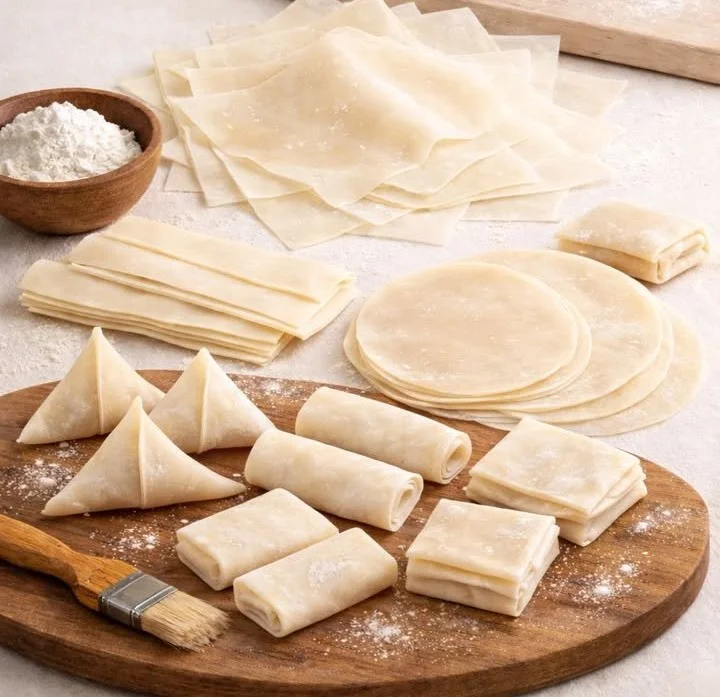
Homemade Samosa Sheets
Ingredients
Method
- In a large bowl, add all-purpose flour and salt. Mix well.
- Slowly add water little by little and knead into a smooth, medium-soft dough. The dough should not be too hard and not sticky.
- Cover the dough and let it rest for 10–15 minutes.
- After resting, knead again for 1–2 minutes until smooth. Divide the dough into 16 equal balls. Keep them covered.
- Roll each ball into a thin small roti (about 6–7 inches). Dust lightly with dry flour while rolling.
- Take one rolled roti, brush a thin layer of oil on top and sprinkle a little dry flour. Place another roti on top. Repeat the same process and stack 4 rotis together.
- Gently roll the stacked rotis into one thin large circle. Do not press too hard.
- Heat a tawa on medium heat. Place the rolled stack on the hot tawa and cook for a few seconds on each side. Do not fully cook. Light bubbles should appear, but the sheets should remain soft and pale.
- Remove from heat and separate the layers immediately while still warm. Peel gently to get thin individual sheets.
- Trim the edges if needed. Your samosa sheets are ready to use for samosas, spring rolls, or box patties.