
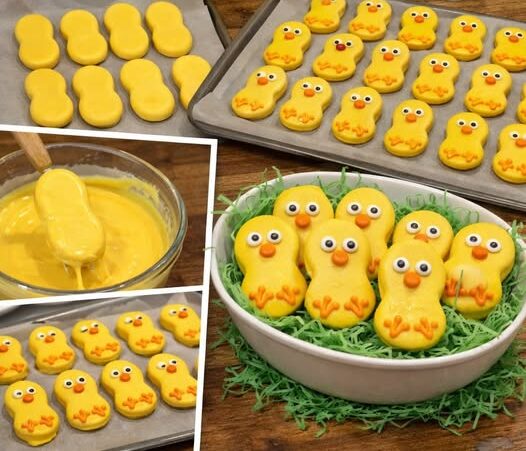
No-Bake Easter Treat You Can Make With Kids If you are looking for an Easter treat that is
equal parts adorable and delicious, these Nutter
Butter Easter Chicks are exactly what your spring
celebration needs. Classic peanut butter sandwich
cookies are dipped in smooth yellow candy coating
and transformed into the most charming little
chicks, complete with candy eyes, orange M&M
beaks, and hand-piped feet. No baking required, minimal ingredients needed,
and the decorating process is genuinely fun for
kids and adults alike. Whether you are filling
Easter baskets, contributing to a spring party
spread, or simply looking for a memorable
kitchen project with little ones, this recipe
delivers on every level.
Why These Easter Chicks Are So Special
What makes this treat stand out among the sea
of Easter dessert ideas is the combination of
simplicity and charm. The Nutter Butter cookie
shape is naturally oval and slightly rounded —
a silhouette that lends itself perfectly to
a chick design without any cutting or shaping
required. The yellow candy coating does the
heavy lifting visually, and the small details
of the eyes, beak, and feet bring each one
to life with minimal effort.
They also taste wonderful. The peanut butter
cookie base pairs beautifully with the sweet
vanilla candy coating, and the orange M&M
adds a pop of chocolate in every other bite.
These are treats that look impressive but
eat like a genuinely satisfying dessert.
Ingredients You’ll Need
To make these Easter Chicks you will need:
- 1 package Nutter Butter cookies
- 12 ounces yellow candy melting wafers
- Orange M&Ms for the beaks
- Small candy eyes
- Orange decorating icing in a tube or
piping bag for the feet - Wax paper or parchment paper
- Optional: green paper grass for display
Every single ingredient is available at most
grocery stores and craft stores in the weeks
leading up to Easter. Candy melting wafers
are widely available in the baking aisle
or at stores like Michaels and Walmart
in the spring season.
Step-by-Step Instructions
Step 1: Prepare Your Workspace
Line a large baking sheet with wax paper
or parchment paper and set it near your
dipping station. Having everything organized
before you start melting the coating is
important — once the candy is melted you
want to move efficiently before it begins
to cool and thicken.
If you plan to display the finished chicks
in a bowl lined with green paper grass,
set that up now so it is ready when you
need it.
Step 2: Melt the Candy Coating
Place the yellow candy melting wafers in
a microwave-safe bowl. Microwave in
30-second intervals, stirring thoroughly
after each interval, until the coating
is completely melted and smooth. Be careful
not to overheat — candy melts can seize
or become grainy if overcooked. Stop
microwaving as soon as the last few lumps
melt with stirring.
Step 3: Dip the Cookies
Using a fork or a dedicated candy dipping
tool, lower one Nutter Butter cookie into
the melted yellow coating. Turn it gently
to ensure complete coverage on all sides.
Lift it out and tap the fork lightly against
the edge of the bowl to shake off any excess
coating — this prevents thick pooling at
the base of each cookie.
Place the coated cookie carefully onto the
prepared parchment paper. Repeat with all
remaining cookies, working at a steady pace.
Step 4: Add the Faces
This step needs to happen while the coating
is still soft and tacky — work on each cookie
individually rather than coating all of them
first. While the coating is still wet, gently
press two small candy eyes near the upper
portion of the cookie. Place one orange M&M
sideways directly below the eyes to form
the beak. Press gently so each decoration
sits flush against the coating.
Step 5: Pipe the Feet
Once all the faces are in place, use orange
decorating icing to pipe small chick feet
at the bottom of each cookie. A simple
three-line bird foot shape works perfectly —
one line straight down and two angled lines
branching from the base. Keep them small
and proportional to the cookie for the
most charming result. If you are new to
piping, practice the shape on a piece
of parchment paper first before moving
to the actual cookies.
Step 6: Let the Coating Set
Allow the decorated chicks to sit at room
temperature for 30 to 45 minutes until the
candy coating is completely firm and the
decorations are fully set. For faster
results, place the baking sheet in the
refrigerator for 10 to 15 minutes.
Step 7: Display and Serve
Arrange the finished chicks in a bowl or
on a platter lined with green paper grass
for a festive Easter presentation that
looks like it came from a professional
bakery. They can also be individually
wrapped in small treat bags tied with
yellow ribbon for Easter basket stuffers
or party favors.
Tips for the Best Results
Work in small batches. Dip and decorate
four to five cookies at a time rather than
coating all of them at once. This ensures
the coating is still soft enough to accept
the candy eyes and M&M beak on each cookie
before it sets.
Keep the candy coating warm. If your
melted candy coating begins to thicken
as you work, microwave it for an additional
15 seconds and stir well. Thin, fluid
coating gives you a smoother, more
even finish on each cookie.
Use a toothpick for eye placement.
Rather than pressing the candy eyes
directly with your fingers, use a toothpick
to position them precisely. This gives
you much more control over placement
and keeps fingerprints off the
fresh coating.
Pipe feet after the coating sets.
If you find the orange icing spreads
or bleeds when piped onto soft coating,
wait until the candy is fully firm before
adding the feet. The icing will sit
more cleanly on a hardened surface.
Room temperature cookies dip best.
Cold cookies can cause the candy coating
to set too quickly and crack. Make sure
your Nutter Butters are at room
temperature before dipping.
Making This a Kids’ Activity
This recipe is genuinely one of the best
kitchen projects to do with children during
the Easter season. The individual steps are
simple enough for small hands to participate
in meaningfully at every stage.
Young children can help arrange the candy
eyes and M&M beaks while an adult handles
the warm melted coating. Older kids can
try dipping with supervision and even
attempt the piped feet with a little
practice. The whole process feels creative
and craft-like in the best possible way.
Set up each component in small bowls
on the counter before you begin so
everything is within easy reach during
the decorating stage. Having the workspace
organized makes the activity flow smoothly
and keeps the fun from turning into
frustration.
Storage and Make-Ahead Tips
Make ahead: These chicks can be made
up to 3 days in advance. Once fully set,
store them in a single layer in an airtight
container at room temperature away from
direct sunlight or heat.
Refrigerator storage: In warmer spring
weather, store in the refrigerator for up
to one week. Allow them to come to room
temperature for 10 minutes before serving
for the best texture.
Gifting: These make exceptional Easter
gifts. Package individually in small treat
bags, stack three or four in a clear box
tied with ribbon, or tuck them into Easter
baskets nestled in paper grass alongside
other treats.
Do not freeze: The candy coating can
develop condensation and become spotty
when frozen and thawed. Room temperature
or refrigerator storage is recommended.
Variations and Seasonal Adaptations
Baby chick color swap: Use white candy
coating with yellow jimmie sprinkles for
a slightly different texture and look that
still reads as a fluffy little chick.
Bunny version: Use white candy coating
instead of yellow and add pink candy ears
made from pink M&Ms or white chocolate
cut into ear shapes. Pipe a small pink
nose with decorating icing.
Halloween version: Use orange candy
coating with black candy eyes and a
candy corn beak to turn the same concept
into festive Halloween candy corn birds.
Spring flowers: Pipe small yellow or
white flower shapes around the base of
each chick using decorating icing for
an extra decorative garden-party look.
Why This Recipe Belongs on Your
Easter Table Every Year
Nutter Butter Easter Chicks occupy a
unique space in the world of holiday
treats — they are simple enough to
make on a casual afternoon, impressive
enough to display at any spring gathering,
and delicious enough that people actually
want to eat them rather than just admire them.
They photograph beautifully, they make
wonderful gifts, and the process of making
them creates the kind of shared kitchen
memories that stick with kids for years.
Once you make them for the first time,
they will earn a permanent spot in your
Easter tradition without question.
Final Thoughts
These Nutter Butter Easter Chicks are proof
that the most charming holiday treats do not
require baking skills, expensive ingredients,
or hours of effort. A package of cookies,
a bag of candy melts, and a handful of
simple decorations are all it takes to
create something that stops people in
their tracks the moment it hits the table.
Make them this Easter and watch them
become the most talked-about treat
of the season.